Introduction
In this guide
In this guideOn this page
Skip the menu of subheadings on this page.This is a paper for discussion. It does not reflect the views of the Committee and should not be cited.
6. Green and black tea are produced from the plant Camellia sinensis (C. sinensis). The difference between the two types of tea depends on several factors, for example, how they are processed after harvesting (e.g. the level of oxidation the leaves are exposed to) and the different varieties that they are produced from.
7. It should be noted that only the liquid product made from steeping dried parts of the C. sinensis plant (e.g. flowers, leaves, roots) has been considered here. Considerations for ‘tea extracts’, which are often used in dietary supplements and other types of teas (e.g., fruit, herbal, white) were not included.
8. The National Health Service (NHS) England website provides guidance on foods and drinks to avoid or limit in pregnancy because of microbiological, toxicological or teratogenic hazards (NHS, 2023). This includes advice on the amount of regular (black) and herbal teas that may be consumed. However, these recommendations are based on limiting the amount of caffeine per day (200 mg per day). The Association of UK Dietitians also recommends limiting the amount of caffeine at 200 mg, which equates to 3 cups of tea a day. Outside of the UK, the US National Centre for Complementary and Integrative Health (NCCIH) states that, “During pregnancy, caffeine intake should not exceed moderate levels. Green tea is a source of caffeine.” (NCCIH, 2025). To our knowledge, neither the NHS nor NCCIH provided commentary or advice on any other compounds that may be present in tea.
UK Import data on tea
9. To gain a better understanding of the UK imported tea market, trade information was collected from the UK HM Revenue and Customs (HMRC). The database only provided import data for green and black tea.
10. In 2024, the UK imported ~110,240 and 3,460 tonnes of black and green tea, respectively. The top ten countries for tea imports based on the total monetary values (£) for EU and non-EU countries are shown in Figures 1 and 2, respectively. The top EU and non-EU countries based on the total value of imports to the UK were Germany and Kenya. The majority of imports were of black tea (HMRC, 2024).
11. At present, tea from China has import restrictions under the High-Risk Food and Feed of Non-Animal Origin (HRFNAO). This means that all tea imports from China must comply with pesticide residue limits under Commission Implementing Regulation (EU) 2019/1793 for residues of tolfenpyrad and, pesticides listed within Article 29(2) of Regulation (EC) No 396/2005.
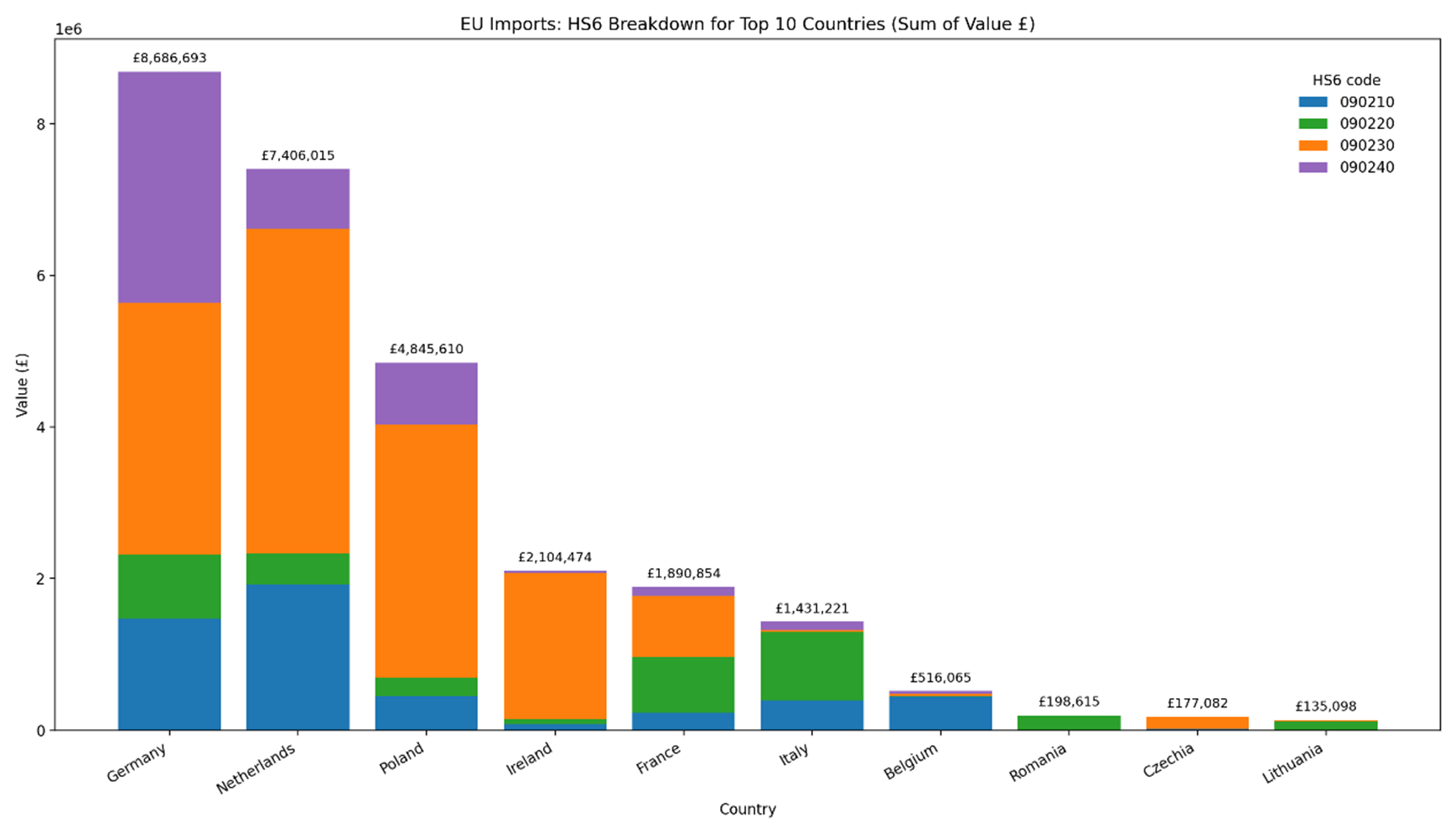
Figure 1 – Top 10 EU countries based on the sum value of imports into the UK. The total value is based on four HS6 commodity categories: 090210 - Green tea in immediate packings of <= 3 kg; 090220 - Green tea in immediate packings of > 3 kg; 090230 - Black fermented tea and partly fermented tea, whether or not flavoured, in immediate packings of <= 3 kg and; 090240 Black fermented tea and partly fermented tea, whether or not flavoured, in immediate packings of > 3 kg. This figure was generated using Microsoft 365 Copilot.
Figure 1 – Top 10 EU countries based on the sum value of imports into the UK. The total value is based on four HS6 commodity categories: 090210 - Green tea in immediate packings of <= 3 kg; 090220 - Green tea in immediate packings of > 3 kg; 090230 - Black fermented tea and partly fermented tea, whether or not flavoured, in immediate packings of <= 3 kg and; 090240 Black fermented tea and partly fermented tea, whether or not flavoured, in immediate packings of > 3 kg. This figure was generated using Microsoft 365 Copilot.
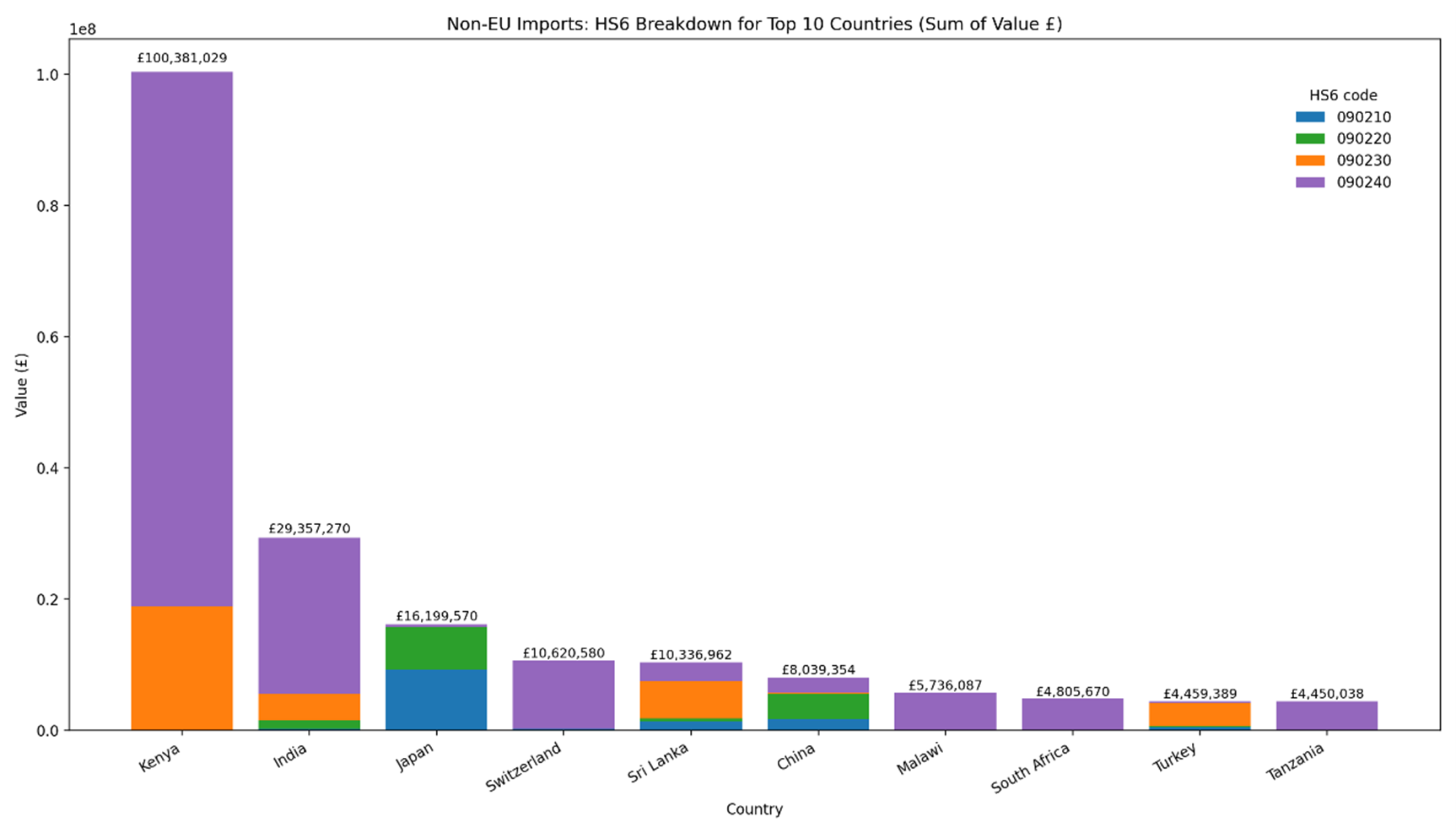
Figure 2 – Top 10 Non-EU countries based on the sum value of imports into the UK. The total value is based on four HS6 commodity categories: 090210 - Green tea in immediate packings of <= 3 kg; 090220 - Green tea in immediate packings of > 3 kg; 090230 - Black fermented tea and partly fermented tea, whether or not flavoured, in immediate packings of <= 3 kg and; 090240 Black fermented tea and partly fermented tea, whether or not flavoured, in immediate packings of > 3 kg. This figure was generated using Microsoft 35 Copilot.
Figure 2 – Top 10 Non-EU countries based on the sum value of imports into the UK. The total value is based on four HS6 commodity categories: 090210 - Green tea in immediate packings of <= 3 kg; 090220 - Green tea in immediate packings of > 3 kg; 090230 - Black fermented tea and partly fermented tea, whether or not flavoured, in immediate packings of <= 3 kg and; 090240 Black fermented tea and partly fermented tea, whether or not flavoured, in immediate packings of > 3 kg. This figure was generated using Microsoft 35 Copilot.